
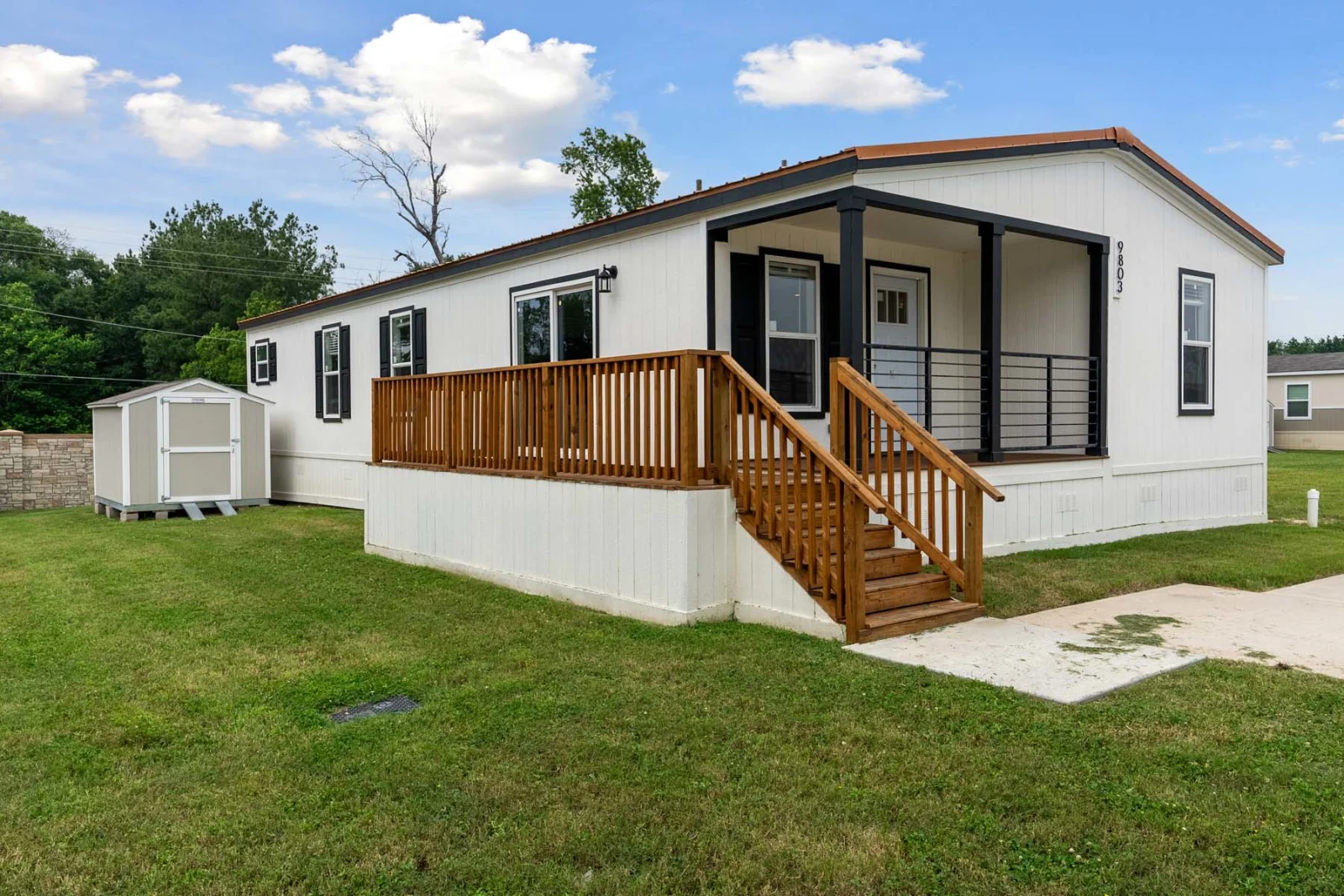
Your mobile home’s value in North Carolina depends on recent comparable sales, its condition, size, age, location, and whether land is included. Start with homes sold under similar lot arrangements, then evaluate meaningful differences. If your home must move, investigate relocation costs before setting a price. What you owe on the home affects your proceeds, not its market value.
You might have seen a similar home advertised for twice what a buyer offered you. That does not necessarily mean the offer is unfair—or that the listing price is realistic.
One sale may include land. Another may involve a renovated home that can stay in a park. Yours might need repairs or removal.
Getting those details straight is the first step toward a useful estimate. Here is how to research prices, compare the right properties, and judge offers without relying on a made-up statewide average.
First, Decide Exactly What Is Included in the Sale
Before searching for prices, put your home into the right category.
| Sale type | What you are evaluating |
|---|---|
| Home with land | The complete property, including the home, site, access, and improvements |
| Home on a rented lot | The home and the conditions under which a buyer can remain |
| Home that must be moved | The home, its transportability, and the buyer’s relocation project |
A home-only sale should not be priced against properties with acreage. Likewise, two identical homes can attract different offers if one can stay where it is and the other must leave.
If you own both the home and land, establish whether the home remains separately titled or became part of the real property. Ownership of the land alone does not answer that question.
Our guide to selling a mobile home without land in North Carolina explains the park, title, and removal issues involved in a home-only sale.
What Affects Your Mobile Home’s Value?
Condition: Look Beyond the Paint
A clean interior helps buyers see the space, but a leaking roof or soft bathroom floor can matter much more.
List known problems with the roof, floors, plumbing, electrical system, heating and cooling, and structural supports. Separate cosmetic work from damage that needs professional assessment.
Keep receipts for completed improvements. They help explain the home’s condition, although spending $8,000 on repairs does not automatically add $8,000 to its value.
Size, Layout, Age, and Construction
Gather the year, manufacturer, model if known, dimensions, and bedroom and bathroom count. Use records rather than guessing from appearance.
Compare single-wides with similar single-wides and double-wides with similar double-wides where possible. Consider usable space and layout as well as square footage.
Age belongs in the comparison, but it should not replace an inspection of the home’s actual condition.
Location and Lot Arrangements
A useful comparable attracts similar buyers. A sale across the state may tell you less than a nearby sale with the same land arrangement.
For a park home, find out what lot rent, deposits, and approval requirements would apply to a new owner. Your existing lease terms may not carry over.
For a home sold with land, access, utilities, site characteristics, and the surrounding market also belong in the valuation.
Title, Financing, and Relocation
Unresolved ownership questions can prevent buyers from proceeding, even when the physical home suits them.
Financing also depends on the property. The Consumer Financial Protection Bureau’s manufactured housing research explains how land ownership and personal-property versus real-property classification affect financing. Buyers should check their specific loan eligibility.
If removal is required, obtain a mover’s assessment. The buyer needs to consider transportation, preparation, destination setup, and whether the home can be accepted at the new site. Those questions can affect what the buyer is willing to pay.
Where Can You Find Actual Mobile Home Sale Prices?
A listing price is easy to find. A confirmed home-only sale price can take more work.
Start with these sources:
- Sold property listings: Useful for manufactured homes marketed through real estate channels. Read the description to determine whether land was included and whether the displayed figure is a completed sale price.
- County property records: A starting point for recorded real estate transfers and property details. Check what property changed hands; a record may cover land, multiple improvements, or an unusual transfer.
- Local professionals: Ask someone experienced in manufactured-home sales for completed transactions resembling yours. Specify whether you need home-only or land-and-home comparisons.
- Park management or sellers with transaction records: They may know about completed home-only sales. Ask whether the price and terms can be verified, and respect privacy.
A removed marketplace advertisement is not proof that a home sold at its asking price. Similarly, an agent’s recollection is weaker evidence than a documented closing price.
If nearby evidence is scarce, widen the search gradually. Consider older sales or similar competing areas, but record the differences. Do not fill the gaps with unrelated properties simply to produce a precise number.
Compare Your Mobile Home With Recent Sales
Use this worksheet to organize the evidence. Start with three useful comparisons if available; that is a practical starting point, not a universal appraisal requirement.
| Detail | Your home | Sale 1 | Sale 2 | Sale 3 |
|---|---|---|---|---|
| Verified price and sale date | Not sold | — | — | — |
| Source of sale information | Your records | — | — | — |
| Land included? | — | — | — | — |
| Size, year, and layout | — | — | — | — |
| Condition and major repairs | — | — | — | — |
| Can the home remain? | — | — | — | — |
| Lot charges or moving requirement | — | — | — | — |
| Important differences | — | — | — | — |
Once completed, identify the closest matches. Give less weight to properties with substantially different land, condition, or relocation arrangements.
Avoid averaging every price in the table. An average is only useful when the underlying comparisons make sense.
You also need to avoid double-counting repairs. If a comparable already had the same roof problem as your home, subtracting the entire roof replacement cost again may distort the comparison.
How to Compare Mobile Home Prices: A Hypothetical Example
Imagine you own a maintained single-wide that can remain in its park, subject to buyer approval.
The figures below are invented solely to explain the method. They are not verified North Carolina sales or a company case study.
| Hypothetical comparable | Sale price | How it compares |
|---|---|---|
| Similar size and condition, comparable lot terms | $36,000 | A relatively close match |
| Similar size, newer interior finishes, comparable lot terms | $40,000 | Better interior condition |
| Similar size, but must be moved | $24,000 | A substantially different purchase |
The first two sales would deserve closer attention when evaluating the home in this example. The third should not pull the estimate down automatically: the buyer was taking on a relocation project.
The $36,000–$40,000 figures provide a starting comparison band for this fictional situation, not a proven value range. More evidence about sale dates, lot costs, condition, and buyer concessions would be needed to support an asking price.
If the home needs work that the first two did not, investigate how buyers price that difference. A contractor’s quote helps describe the expense, but the market adjustment is not automatically identical to the repair bill.
When Should You Get an Appraisal?
Consider an independent appraisal when comparisons are scarce, the home and land are difficult to evaluate separately, or you need a documented opinion for a specific purpose.
Explain the assignment before hiring someone. Are you valuing the home alone, the home with land, or a property that must be relocated? Ask about experience with that situation.
Fannie Mae’s manufactured housing appraisal guidance emphasizes suitable sales evidence and appraisers familiar with the local manufactured-home market. Those mortgage requirements do not apply to every private home-only sale, but they illustrate why relevant expertise matters.
A buyer’s offer serves a different purpose. It shows what that buyer proposes to pay under specific conditions; it is not an independent appraisal.
Can Online Estimates or Tax Values Give You the Answer?
They can provide context, but first determine what they are measuring.
An online estimate may include land you are keeping or use nearby properties unlike your home. It may also lack information about current damage, renovations, or park restrictions.
A county assessment has its own timing and purpose. The North Carolina Department of Revenue explains the distinction between real-property and personal-property assessments. Real property undergoes periodic county reappraisals, while personal property is generally appraised annually.
Ask the county how your home is classified and whether the assessed figure includes land. Then compare that information with current sale evidence.
Neither an automated estimate nor a tax assessment guarantees the price a buyer will pay.
Compare Offers by What You Keep
Once you have a reasonable view of value, separate four numbers:
- Asking price: What you advertise.
- Estimated market value: A supported opinion of value under stated conditions.
- Offer price: What a particular buyer proposes to pay.
- Net proceeds: What remains after your applicable expenses and obligations.
A direct buyer may account for repairs, holding costs, resale uncertainty, and profit. A retail buyer may pay more but require financing, inspections, or repairs. Evaluate the terms of each actual offer.
Use this calculation:
Sale price − seller-paid expenses − loan payoff − other applicable balances = estimated proceeds.
A Hypothetical Proceeds Comparison
| Item | Repair and market | Sell as-is |
|---|---|---|
| Assumed sale price | $52,000 | $39,000 |
| Seller-paid repairs | −$8,000 | $0 |
| Selling expenses | −$3,000 | −$1,000 |
| Holding costs until closing | −$2,000 | −$500 |
| Before loan payoff and other balances | $39,000 | $37,500 |
These are illustrative assumptions, not typical local prices, fees, or company offers.
Repairing and marketing produces $1,500 more in this example. However, a $2,000 repair overrun would remove that advantage. A higher retail sale price could improve the result.
Replace every assumption with your own figures. Include applicable lot rent, taxes, removal costs, and loan payoff without counting the same expense twice.
For more detail on your selling options, see our guide to selling a mobile home in North Carolina.
Should You Make Repairs Before Selling?
Begin with cleaning, removing clutter, and documenting the home’s condition. Before paying for larger improvements, get written estimates and compare the likely outcome with selling as-is.
Ask whether similar renovated homes actually sold for enough more to justify the work. Include the additional time, lot rent, utilities, and other holding expenses.
A new kitchen may look appealing, but it will not resolve unclear ownership or a difficult relocation. Address those obstacles before committing to a renovation budget.
Be honest about known damage. Cosmetic work should not hide problems buyers need to understand.
5 Mobile Home Pricing Mistakes to Avoid
1. Pricing around your loan balance. Your payoff affects what you keep, but buyers evaluate the property and their alternatives.
2. Mixing home-only and land-and-home sales. Separate these groups before comparing prices.
3. Treating every improvement as added profit. The cost of an upgrade and its contribution to resale value are different.
4. Relying on a fixed depreciation formula. Age alone cannot account for condition, land, lot terms, and local demand.
5. Ignoring the offer’s conditions. A high price may depend on financing, repairs, park approval, or a move that has not been investigated.
Frequently Asked Questions
How do I estimate my mobile home’s value in North Carolina?
Compare verified sales of similar manufactured homes in your local market. Match the land arrangement, size, age, condition, and lot terms. If useful sales are scarce, ask an appraiser experienced in manufactured housing for a documented opinion.
How much is my mobile home worth without land?
There is no standard price. Compare home-only sales and consider the home’s condition, lot rent, and whether it can remain in place. If it must move, investigate transportation and setup requirements before setting an asking price.
Does a mobile home always lose value?
Not always. Sale values can change with condition, local demand, land ownership, and lot arrangements. Avoid applying a fixed annual depreciation rate to every home; recent comparable sales provide more useful evidence.
Is my North Carolina property tax assessment the same as my home’s selling price?
Not necessarily. The assessment reflects the property’s classification and valuation date. Check whether it includes land, then compare it with recent sales and your home’s current condition. A tax assessment does not guarantee a buyer’s offer.
Should I repair my mobile home before selling?
Only if the likely benefit justifies the cost and time. Compare written repair estimates with sales of similar renovated homes, and include holding expenses. An as-is offer can help you evaluate the alternative before committing to major work.
Is a cash offer the same as my mobile home’s market value?
Not necessarily. A cash offer reflects one buyer’s terms, costs, and plans for the home. Compare it with relevant completed sales and other offers. Focus on both the price and what you would keep after expenses.
Request a Cash Offer for Your North Carolina Mobile Home
At We Buy Mobile Homes In The Carolinas, we review location, age, size, condition, repair needs, title situation, and whether the home is in a park or on private land.
Tell us whether land is included and whether the home must move. We may request photographs or arrange a look before deciding whether we can make an offer.
Read about how our mobile home buying process works, explore our North Carolina mobile home buying service, or request a free, no-obligation cash offer.
Use the offer alongside your research to decide which option suits the home, your timeline, and the amount you expect to keep.